
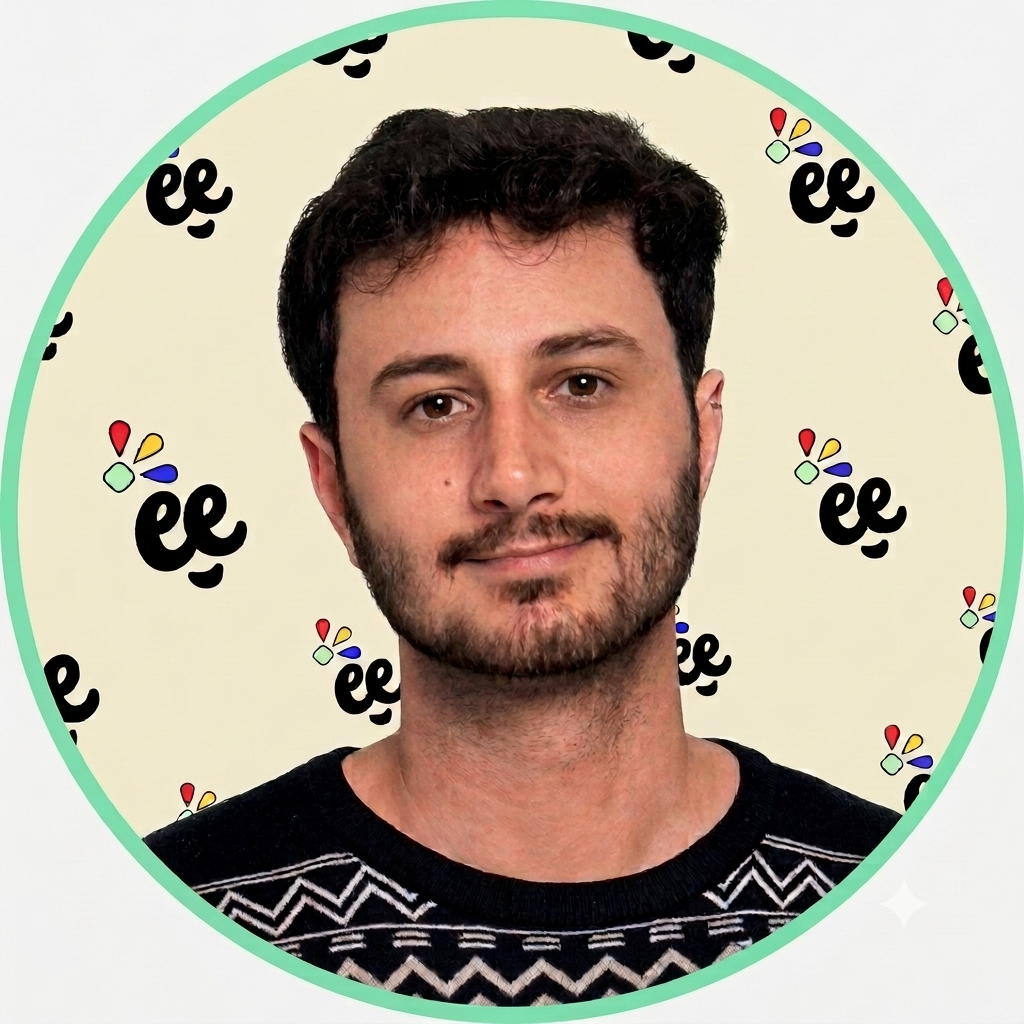
Alexander Luis

The Person Behind Gudiee

Gudiee did not begin with a business plan. It started much earlier, growing up in Miami, Florida, watching the people around me build, adapt, and create with whatever they had.
Alexander Luis, founder of Gudiee
Alexander Luis · Founder of Gudiee

Building something starts long before you give it a name

Gudiee did not begin with a business plan.

It started much earlier, growing up in Miami, Florida, watching the people around me build, adapt, and create with whatever they had.

My parents became parents when they were young. They did not have an easy path, but they built one anyway. My mother finished high school and spent years working in schools, taking on different roles wherever she was needed. My father entered the workforce early and spent years doing whatever work was available: construction, landscaping, cable installation, automotive work, highway projects, and countless other jobs.

Eventually, he built something of his own by starting an irrigation business.

Growing up, I saw firsthand what it meant to create opportunities instead of waiting for them. I spent time helping my father on jobs, handing him tools, holding lights, bringing materials, and learning how much work goes into building something from the ground up.

Later, while I was in college, I helped with that business myself. I repaired irrigation systems, documented work, tracked materials, and even built an Excel billing system so the business could operate more efficiently without needing additional software.

At the time, I did not realize it, but I was learning something that would influence everything I built later:

People can create incredible things when they have the right skills, tools, and opportunities.

Learning how systems work

I have always been curious about how things work.

As a kid, I enjoyed taking things apart and figuring out how they were built. I repaired phones, experimented with technology, and constantly looked for ways to understand the systems behind the things I interacted with.

My siblings and I spent countless hours together growing up. We played with toys, competed in sports, and spent a lot of time playing video games together.

Some of my favorite memories were couch co-op games where we had to work together to overcome challenges. We competed, argued, laughed, and figured things out as a team.

Looking back, those experiences shaped how I think today. I have always enjoyed solving problems, improving systems, and finding better ways to accomplish something.

That curiosity followed me as I grew older.

I was fascinated by understanding rules, systems, and what happened when they could be changed. Whether it was technology, games, or everyday processes, I always wanted to understand why things worked the way they did and whether they could work better.

I also discovered entrepreneurship early.

In elementary school, I sold an Arizona tea to another student for $10 because he was impressed by the size of the can and wanted it. I remember showing my parents the money and explaining what happened. They laughed, but it was one of my earliest lessons in value perception.

I also sold cookies my grandmother brought to school for more than they originally cost because students were willing to pay for convenience instead of waiting in line.

Even at a young age, I was interested in how people exchange value.

That curiosity eventually led me to study Economics in Business and Industry at Florida International University.

Understanding how products move

Originally, I thought I wanted to become a politician. I was interested in economics because I wanted to understand how societies, markets, and money moved.

Over time, I realized I wanted to create impact in a different way. I am naturally more introverted, and I found myself drawn toward building solutions rather than being in front of a crowd.

After college, my path led me into operations and logistics.

My first major role was as an Order Fulfillment Associate at Home Depot while I was in college. Looking back, it was the beginning of the same supply chain world I work in today.

I later joined Ameriworld Fulfillment and started building my career in operations. Over nearly six years, I grew from a support role into an Operations Manager, taking on more responsibility, solving more complex problems, and learning how businesses move products from an idea to a customer's hands.

Operations taught me something important:

The customer only sees the final product.

They do not see the systems behind it.

They do not see the inventory planning, warehouse processes, transportation decisions, supplier relationships, technology, and people required to make that product arrive correctly.

Every successful shipment represents hundreds of decisions working together.

That experience changed the way I looked at the world.

Every day, I found myself asking the same question:

"How can this be done better?"

That mindset led me deeper into process improvement, automation, and Lean Six Sigma principles. I became fascinated by removing wasted time, reducing errors, and creating systems that allow people to work more effectively.

Discovering the creator side

While I was learning how products move, I became interested in how products are created.

Someone at work introduced me to 3D printing, and I immediately saw something different.

This was not just a machine.

It was a way to turn an idea into something physical.

The first thing I designed was a simple stencil for my family's business logo so they could use it for spray painting. It was a small project, but it changed how I viewed manufacturing.

A person could have an idea, design it, and create a real object.

No factory required.

From there, I started learning CAD, sublimation, and other production methods. I enjoyed creating custom gifts, designing artwork, and making things that had meaning because they were created specifically for someone.

My wife is an artist, and both of my sisters are artists as well. Being surrounded by creativity helped me appreciate something I think is often overlooked:

Creating something is part of being human.

People want to make things. They want to express themselves. They want to share ideas.

But many talented creators never have a path to turn those ideas into products.

That problem stayed with me.

Why I built Gudiee

Gudiee started with one simple question:

What if more people could turn their creativity into opportunity?

I saw two worlds that were disconnected.

On one side were creators with ideas, artwork, and designs.

On the other side were makers with skills, equipment, and the ability to produce physical products.

Between them were suppliers with the materials needed to make everything possible.

The technology already existed.

The talent already existed.

The missing piece was connection.

That is why I built Gudiee.

Gudiee is designed to connect creators, makers, suppliers, and buyers into one network where ideas can become real products.

Creators can share their designs.

Makers can produce products using their skills and equipment.

Suppliers can provide the materials needed to support production.

Buyers can discover unique products created through a more personal process.

The goal is not simply to create another marketplace.

The goal is to build infrastructure for a more distributed future of manufacturing.

A future where more people have the ability to participate.

The future I believe in

I believe manufacturing is changing.

Large-scale factories will always have an important role, but I believe many products with creativity, personalization, and human expression can be made closer to the people who want them.

I believe the future should not be about replacing human creativity.

It should be about expanding it.

That is why Gudiee will always value human-made creativity. People create. People imagine. People build upon ideas and turn them into something meaningful.

Technology should give more people the ability to create, not remove the human element from creation.

My vision is a world where millions of people can participate in making, whether that becomes a side income, a small business, or a full-time career.

The person behind the idea

Building Gudiee has been one of the biggest challenges of my life.

The hardest part has not been the work. It has been wondering whether other people will believe in the idea the same way I do.

But I continue because I have never believed in something this strongly before.

I spend a lot of my time thinking about Gudiee: designing systems, solving problems, and imagining what this network could become. Even my daily commute becomes time to reflect, plan, and think through the future.

I am naturally quiet and analytical. I do not always express everything I feel, but I care deeply about what I build and the people it can help.

My wife has been one of my biggest supporters throughout this journey. She is an artist herself and brings creativity and perspective into my very structured way of thinking. Where I often see systems and processes, she reminds me to see the color and emotion behind what people create.

At the end of the day, Gudiee is not just about products.

It is about people.

It is about giving creators a place to grow, helping makers build opportunities, supporting communities, and creating a future where more people can build something of their own.

I do not know exactly what Gudiee will become decades from now.

But I know why I started.

I want to help people create, grow, and build a better future for themselves.

That is the mission I am building toward every day.